Author: client.chasav.tech
-
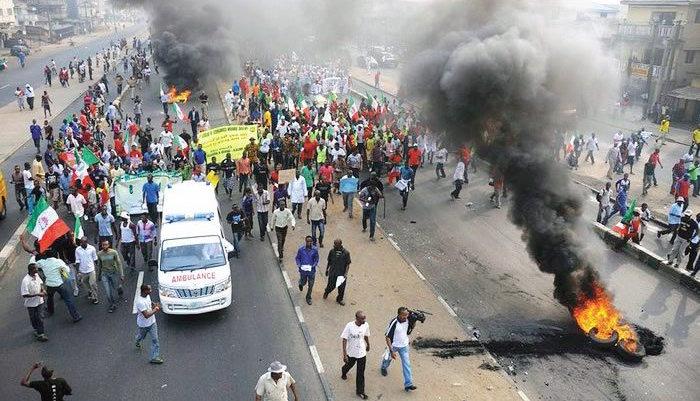
Why Tinubu should prioritise security
Shortly before he departed for the 5th Mid-year Co-ordination Meeting of the African Union (AU), held at the United Nations (U.N.) Complex in Nairobi, Kenya, last week, President Bola Ahmed Tinubu, declared an emergency on food security.
The details of this declaration are captured succinctly in a statement by the Presidential Adviser on Special Duties, Communications and Strategy, Dele Alake. According to Mr. Alake, the declaration on food security, like the President’s other interventions, was meant to have an immediate impact on the most vulnerable Nigerians.
He explained that the President was not unmindful of the rising cost of food and its impact on citizens. He said that while availability (of food) was not an issue, affordability was a major concern for many Nigerians in all parts of the country.
Mr. Alake further explained that the emergency on food would be tackled in the immediate, medium and long term and that some of the savings from the removal of fuel subsidy would be channeled into the agricultural sector.
The Presidential Adviser enunciated measures through which the emergency on food would be accomplished. First, he said, “We will immediately release fertilizer and grain to farmers and households to alleviate the shortage.”
Second, he spoke of an urgent “synergy between the Minister of Agriculture and the Ministry of Water Resources to ensure adequate irrigation of farmlands and ensure that food is produced all year round.”
Third, he said the Tinubu administration “will establish and support a National Commodity Board that will review and continuously assess prices and maintain a strategic food reserve that will be used as a price stabilisation mechanism”.
For a government that is responsive and sensitive to the welfare of its citizens, this declaration of an emergency on food security is ineluctable. In the aftermath of the peremptory withdrawal of subsidy on fuel by the President, all costs associated with transportation, had shot through the roof. Inflation which had been upward bound has, by the accounting and telling of the National Bureau on Statistics (NBS), reached an unprecedented 22.7%. Not less than 25.3million Nigerians are said to be suffering from acute food insecurity. Poverty and destitution have increased by leaps and bounds. Despair haunts the land like some ogre.
READ MORE HERE
-

What is Access Control?
What is access control?
Access control is a security technique that regulates who or what can view or use resources in a computing environment. It is a fundamental concept in security that minimizes risk to the business or organization.
There are two types of access control: physical and logical. Physical access control limits access to campuses, buildings, rooms and physical IT assets. Logical access control limits connections to computer networks, system files and data.

Biometric Identification Concept. African American Man Holding Cellphone In Hand, Showing Application For Fingerprint Scanning With A Zone To Touch With Thumbprint Icon On The Device Screen To secure a facility, organizations use electronic access control systems that rely on user credentials, access card readers, auditing and reports to track employee access to restricted business locations and proprietary areas, such as data centers. Some of these systems incorporate access control panels to restrict entry to rooms and buildings, as well as alarms and lockdown capabilities, to prevent unauthorized access or operations.

Logical access control systems perform identification authentication and authorization of users and entities by evaluating required login credentials that can include passwords, personal identification numbers, biometric scans, security tokens or other authentication factors. Multifactor authentication (MFA), which requires two or more authentication factors, is often an important part of a layered defense to protect access control systems.
READ MORE HERE
-

Isreal at War Again
Israel has declared war on the Palestinian militant group Hamas after it carried out an unprecedented attack by air, sea and land on Saturday.
The large-scale surprise assault has left more than 1200 dead in Israel, according to public broadcaster Kan. It prompted a lethal volley of retaliatory Israeli airstrikes on Gaza that has killed at least 900 people.

As they retreated into Gaza, the militants claimed to have taken at least 100 hostages with them and have threatened to kill them if airstrikes target Gaza without warning. Israel has pledged that Hamas will pay a heavy price and may now be preparing a ground incursion into Gaza.
ORIGINAL STORY AND UPDATE ON CNN